 english


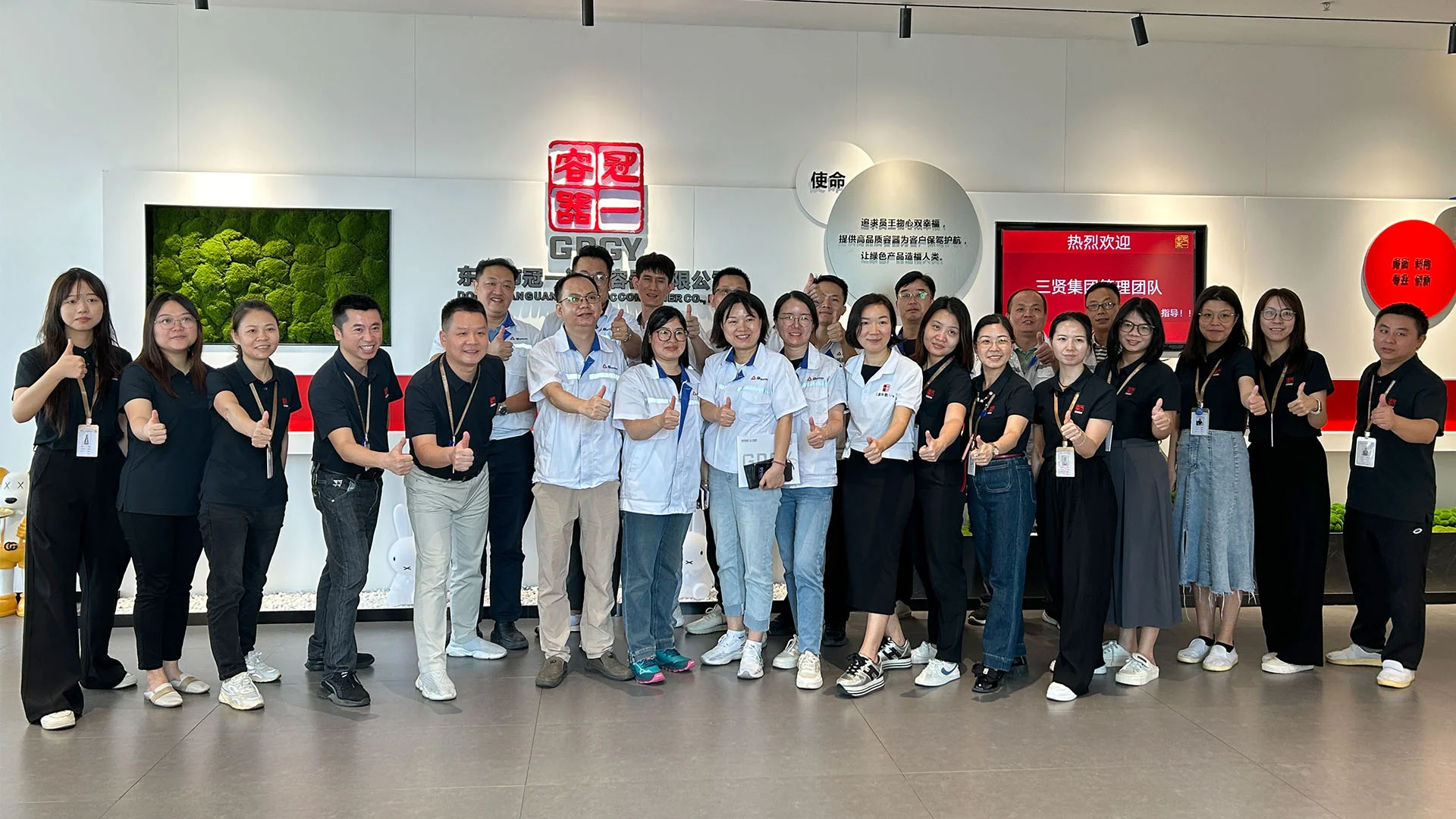
Fostering Excellence: Sanken Electronic Manufacturing's executive Visit to GY-Container for Quality Management and Efficient Production Learning Exchange
Oct. 15, 2024


Vehicle noise can enter the cabin through many paths. Tire and road noise, powertrain vibration, structural resonance, and contact between neighboring components can all affect acoustic comfort.
At the same time, automotive manufacturers need protective parts that are lightweight, fit complex vehicle geometries, and remain stable during mass production.
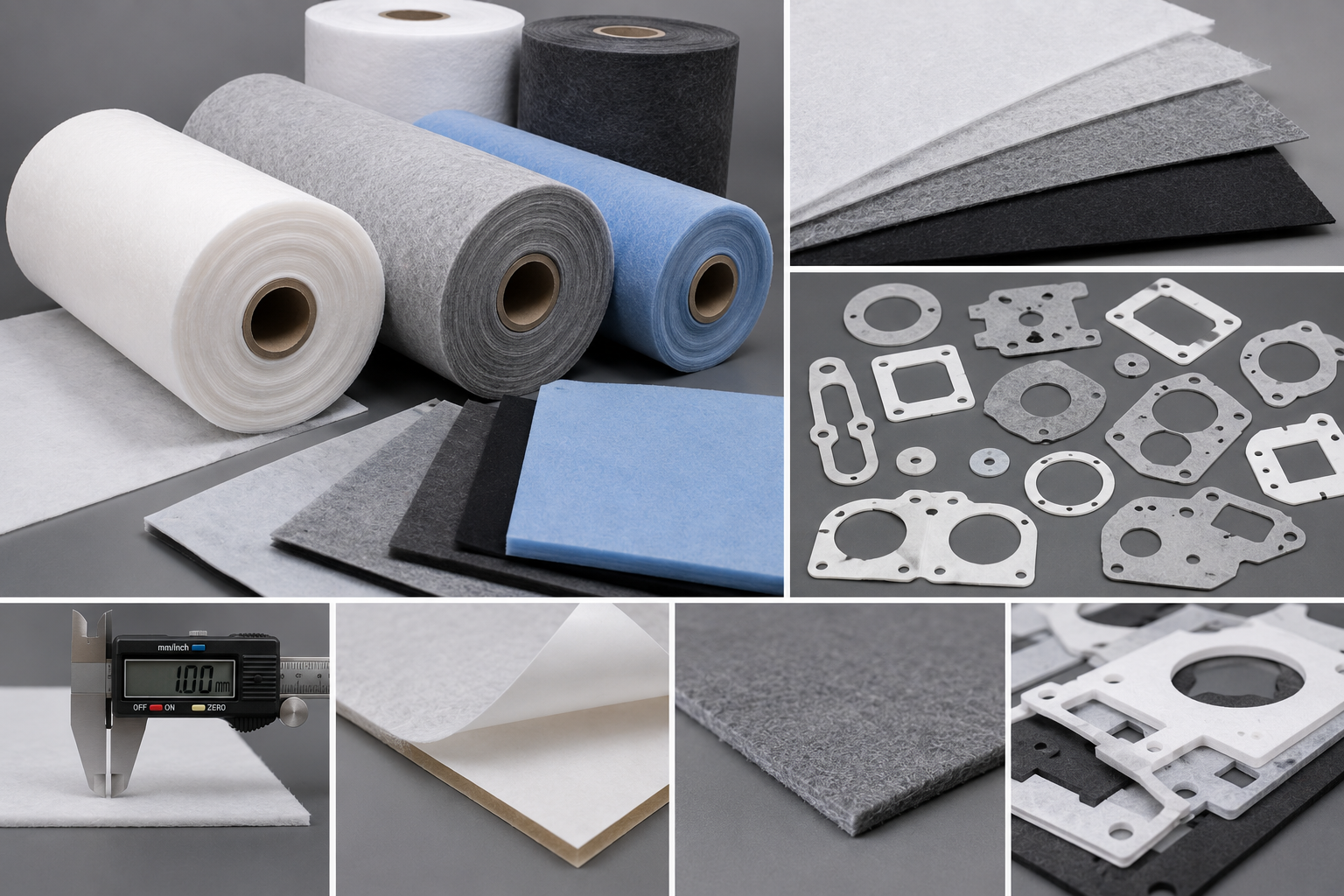
Sanken processes and forms felt and nonwoven materials into custom automotive components for underbody, wheel arch, trunk, and interior applications. The goal is not simply to add material, but to place the right structure in the right area to improve NVH performance while supporting lightweight protection.
The functional requirements vary significantly by installation position.
| Application area | Main challenge | Required function |
|---|---|---|
| Engine / underbody area | Road and powertrain noise, vibration | Acoustic control and lightweight protection |
| Wheel arch area | Tire noise, road impact and vibration | Noise reduction and protective isolation |
| Trunk floor | Cabin noise and structural vibration | Acoustic absorption and surface protection |
| Interior floor area | Contact noise and vibration transmission | Isolation and cushioning |
A single material structure is therefore not suitable for every vehicle location.
The component geometry, thickness, forming depth, mounting position and surrounding structure all influence the final solution.
Large automotive acoustic components are rarely flat.
Underbody covers, wheel arch liners and trunk floor components may contain:
Multiple mounting holes
Deep or shallow formed areas
Irregular outer contours
Local raised sections
Openings for surrounding vehicle structures
If the molded part does not follow the installation geometry accurately, it may create interference, poor fit or inconsistent mounting.
Sanken forms and trims felt and nonwoven materials according to customer drawings and component geometry. Controlled forming, cutting and punching allow complex large-format parts to fit the intended installation area more consistently.
This is particularly important for parts such as:
Engine and underbody covers
Wheel arch liners
Trunk floor covers
Interior acoustic panels
Protective molded liners
Felt and nonwoven materials are useful in automotive applications because they can provide acoustic and protective functions without relying on heavy rigid structures.
Depending on the application, the component can help:
Absorb or reduce transmitted noise
Isolate vibration between structures
Reduce contact and friction noise
Protect adjacent surfaces
Provide lightweight coverage over large areas
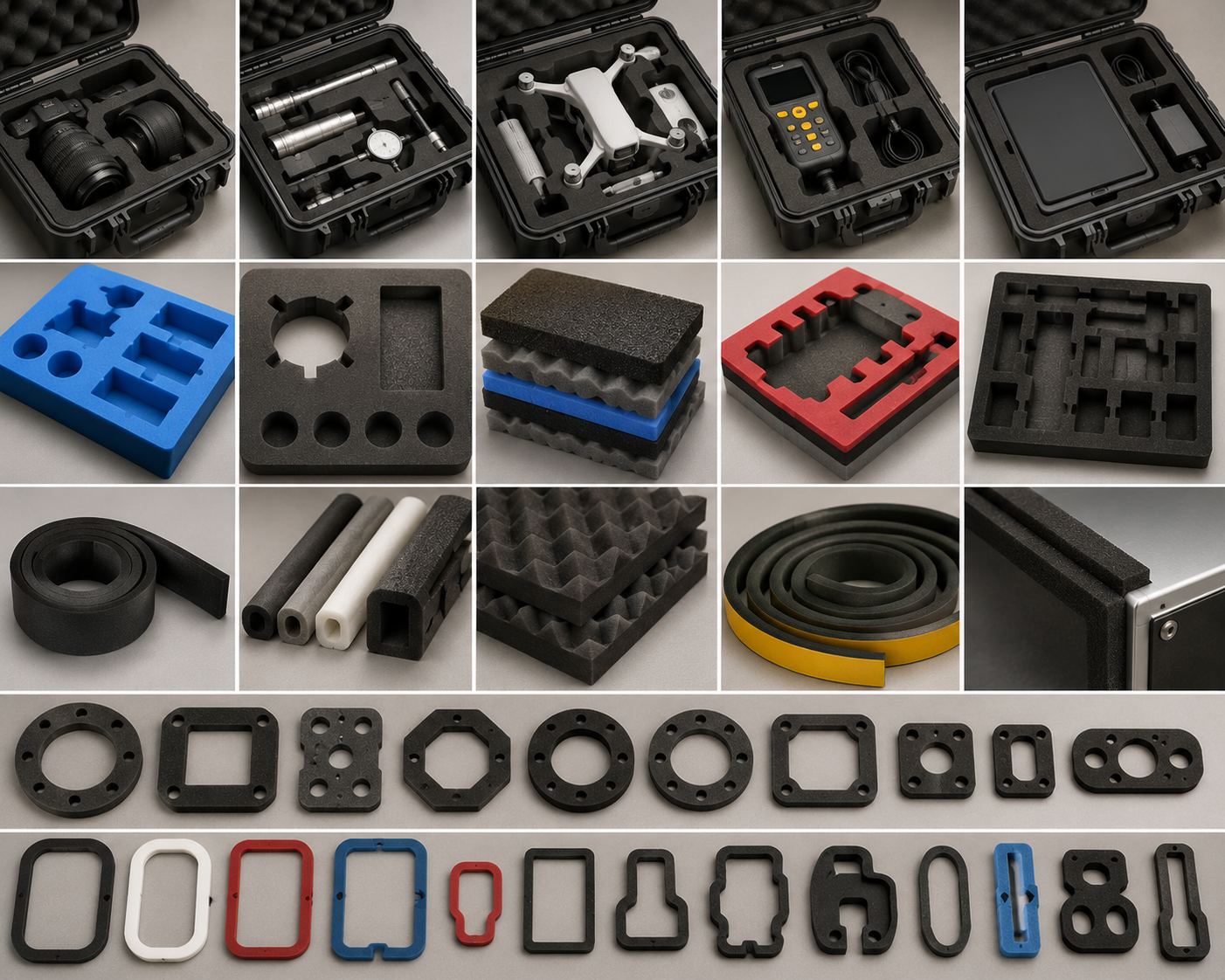
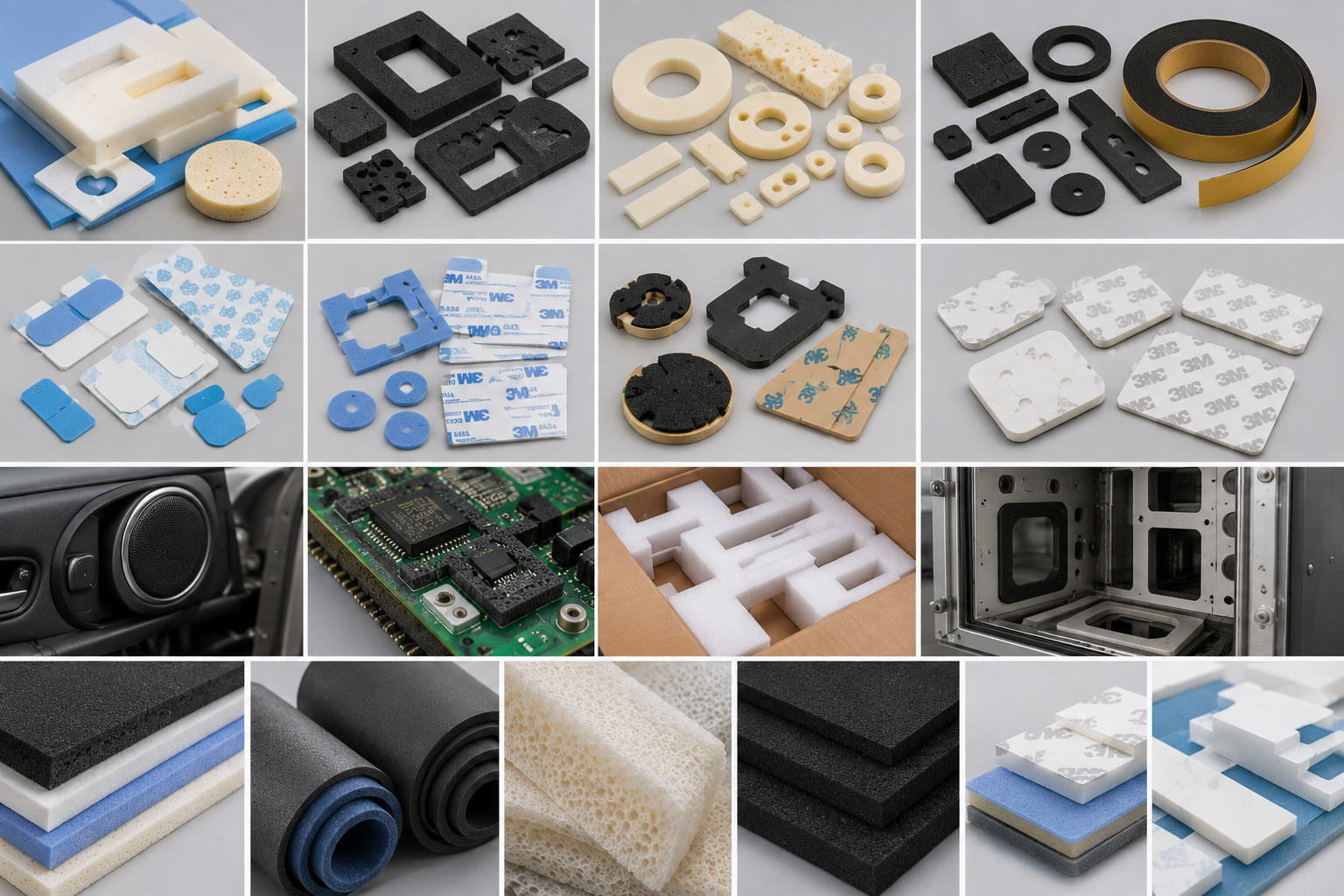
Sanken can also combine felt or nonwoven substrates with foam or adhesive layers when additional cushioning, fixation, or local protection is required.
The material structure is selected according to the installation area and functional requirement rather than using one standard construction for every automotive component.
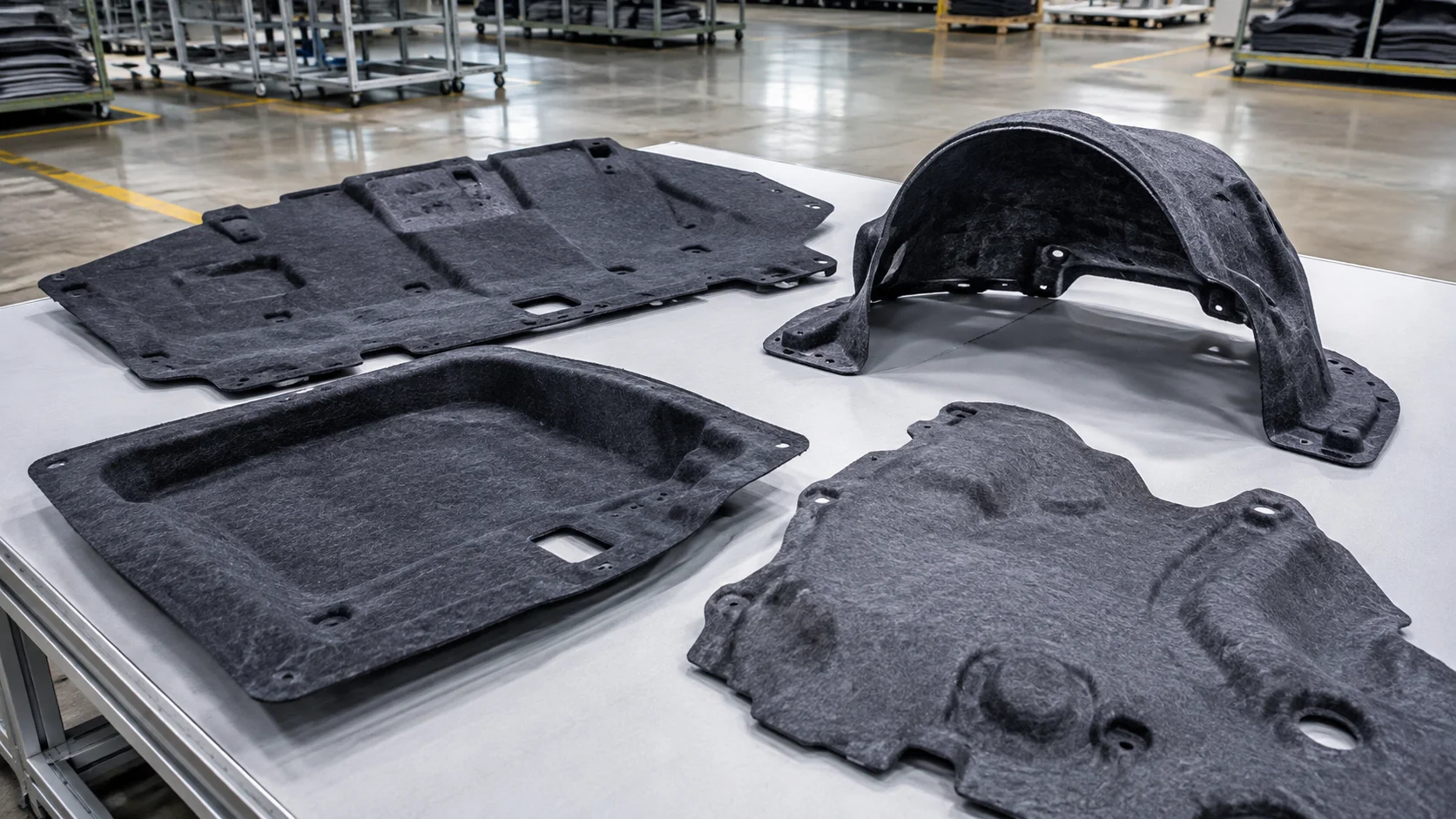
Molded felt and nonwoven automotive components for NVH and lightweight protection
For large molded components, acoustic performance alone is not enough. The part must also remain dimensionally consistent from batch to batch.
Common production concerns include:
Distortion after forming
Misaligned mounting holes
Unstable outer contours
Inconsistent formed depth
Edge deformation
Sanken integrates material preparation, forming, trimming, punching and inspection to control the critical geometry of each component.
This helps automotive customers receive parts that are ready for assembly with more consistent shape, mounting position and production quality.
Typical application directions include:
Underbody and engine-area protection
Molded acoustic covers can help reduce road and powertrain noise while providing lightweight protection around lower vehicle structures.
Wheel arch areas
Formed nonwoven or felt components can help manage tire and road noise while providing isolation from surrounding structures.
Trunk and interior floor areas
Large molded felt components can help reduce cabin noise, isolate vibration and protect interior surfaces.
The final material construction should always be confirmed according to the vehicle structure, environmental requirements and customer validation standards.
Automotive NVH components need to balance several requirements at once: acoustic performance, low weight, complex geometry and repeatable production.
By converting felt and nonwoven materials into molded, production-ready components, Sanken helps automotive manufacturers:
Improve noise and vibration control
Reduce contact-related noise
Protect surrounding structures
Support lightweight vehicle design
Maintain consistent fit during mass production
If you are developing an underbody cover, wheel arch liner, trunk floor component or other molded automotive acoustic part, Sanken can review the drawing, installation position and functional requirements to develop a suitable material and forming solution.